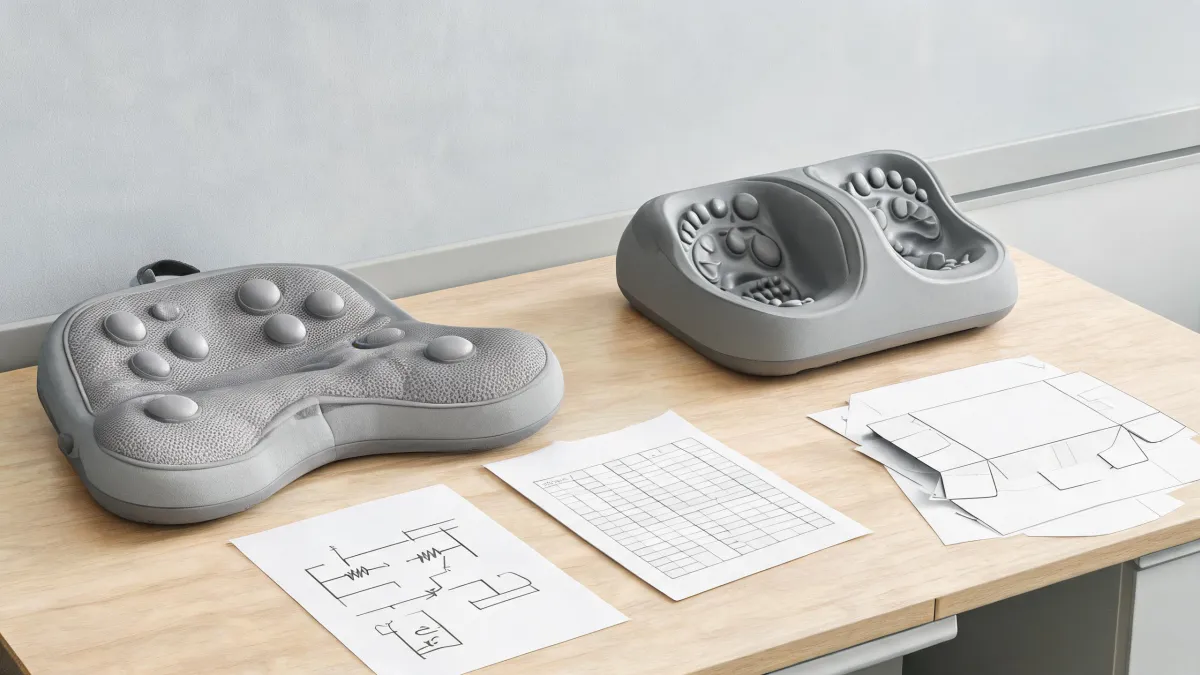
A folded bath towel in one hand, the SP-25H propped behind a shoulder, and the reflex to lean back until the rollers bite — that is the moment where most of the comfort problem with this unit gets decided. The Homedics SP-25H is a shiatsu pillow — in plain terms, a cushion with a moving massage mechanism inside — and it is designed for the neck, back, and shoulders. Everything here stays inside that model and that manual. Nothing transfers to a different massager or to another product in the same line.
The documented way to take the edge off a session is short and unglamorous. The manual asks for gentle force only, and it offers one concrete method for softening what reaches you: a towel placed between you and the unit. That is the whole comfort toolkit: a barrier, light contact, and a body that is not leaning on the mechanism. What follows is the order to run it in, because sequence changes the result.
Day One Towel Before Contact
On day one, the towel goes down before your body does. The barrier sits between your skin and the cushion surface, so the mechanism still moves and works the way it was built to, but the force that reaches you is spread and cushioned rather than delivered straight into one spot. Nothing about the mechanism changes. What changes is how much of its force your body actually receives.
Reverse the order and you pay for it. Sliding a towel under yourself after you have already settled means lifting your weight off the cushion, threading fabric into the gap, and dropping back down. Contact changes in a jump, and you lose the reference for how hard you were pressing a second earlier. That jump is an inference from the sequence, not a measured result, and it is why the towel belongs in the setup rather than in the middle of a session.
Fold thickness is the one adjustment you tune by feel rather than by a spec. Start thin, a single fold, settle back, and if the first contact still reads firm, add a layer. The effect is a softer opening force you can judge before the mechanism has done any work, and it costs you nothing except the time it takes to refold.
Day One Gentle Force Instead of Deep Pressure
The force rule in the manual is blunt: only gentle force should be exerted against the unit, to eliminate any and all risk of injury. No number, no dial setting, no poundage — the qualitative instruction is the whole instruction. So the towel becomes your coarse adjustment and your body weight becomes the fine one. Lean less and the contact softens; lean more and it hardens.
It is worth knowing why leaning harder does not buy deeper work. The moving mechanism does the work inside the cushion; your contribution is the force you press back with. Adding body weight raises contact pressure against the mechanism rather than changing the mechanism's own motion. What you feel typically reads as more pressure concentrated in the same small patch of skin and muscle rather than as deeper work underneath it.
The gain is lower, more controllable force that you can dial with a gesture, and that control is the point. This is a comfort procedure, not a treatment claim, and nothing here promises a clinical result.
First Week Adjusting Without Roller Pressure
During the first week, the failure mode to watch is the position change. The instruction is specific: to avoid pinching, do not lean on the shiatsu back massage mechanism in the cushion while adjusting your body position, and do not jam or force any part of your body into the moving mechanism.
Translate that into three moves. Unload — take your weight off the cushion. Reposition — move the towel or the unit itself, not your torso against the mechanism. Re-contact — settle back lightly, with the towel as the boundary. Unloading first is what keeps your body mass out of the mechanism while it is still running.
The wrong version is using the cushion as a lever: pressing a shoulder or a hip into it to shove your torso into a new spot. That lands your weight directly on the moving parts at the exact moment they are traveling, which is the pinching scenario the manual is written to head off. The price of doing it correctly is speed; adjustments arrive in stages instead of one smooth slide.
First Week Running the Documented Session in Order
Order is the whole trick here.
Run the session like this. Pick one of the three documented areas the manual's figures show and set the unit there. Lay the towel across the contact area before your body touches anything. Settle back with gentle force, light enough that the first pass of the mechanism is readable rather than overwhelming. If the fit is wrong, back off, adjust the towel or the unit, and settle again before it presses in. When the session is done, take the unit away rather than lying on it while it runs. The manual excerpt covers placement, the towel, force, and position changes; it does not state session duration or frequency, so those belong in a question to the seller or a re-read of the full booklet, not in a guess.
Run it in that sequence and the towel, the light contact, and the position changes stop competing for the same moment.
One Month Later Rechecking Towel and Force Fit
Consider a month of regular use. This is hypothetical, not a logged test, but the drift pattern is predictable: both the towel and the body position slide toward more pressure. The towel migrates out of place, gets folded thinner, or gets skipped entirely because a session felt fine without it. The lean creeps back in as you get comfortable and start chasing the older sensation.
The check is two questions at the start of a session. Is the towel between you and the unit right now, before contact? And are you still keeping your weight off the mechanism when you shift? A no to either one means the session has quietly become the push-harder version the manual argues against.
What that buys you is a routine that does not rot into habit. What it costs is a short self-audit before you settle back. No durability claim, no outcome claim, just a checkpoint.
The Tradeoff Softer Force and Less Deep Pressure
Here is the deal stated plainly. A towel plus a light lean gives you contact you can modulate, less exposure to the over-force and pinching problems the manual is written to prevent, and a session that stays predictable from the first minute. You give up direct roller-on-skin intensity, and you give up the pressing habit that feels like it must be doing something.
If what you want from a massager is firm, deep, dug-in work on one stubborn spot, this model's manual does not support that promise; its instruction runs the other direction. If you want a neck, back, and shoulder cushion you can dial down with a folded towel and a light settle-back, the SP-25H has a documented procedure for exactly that, and setting it up takes about a minute.
