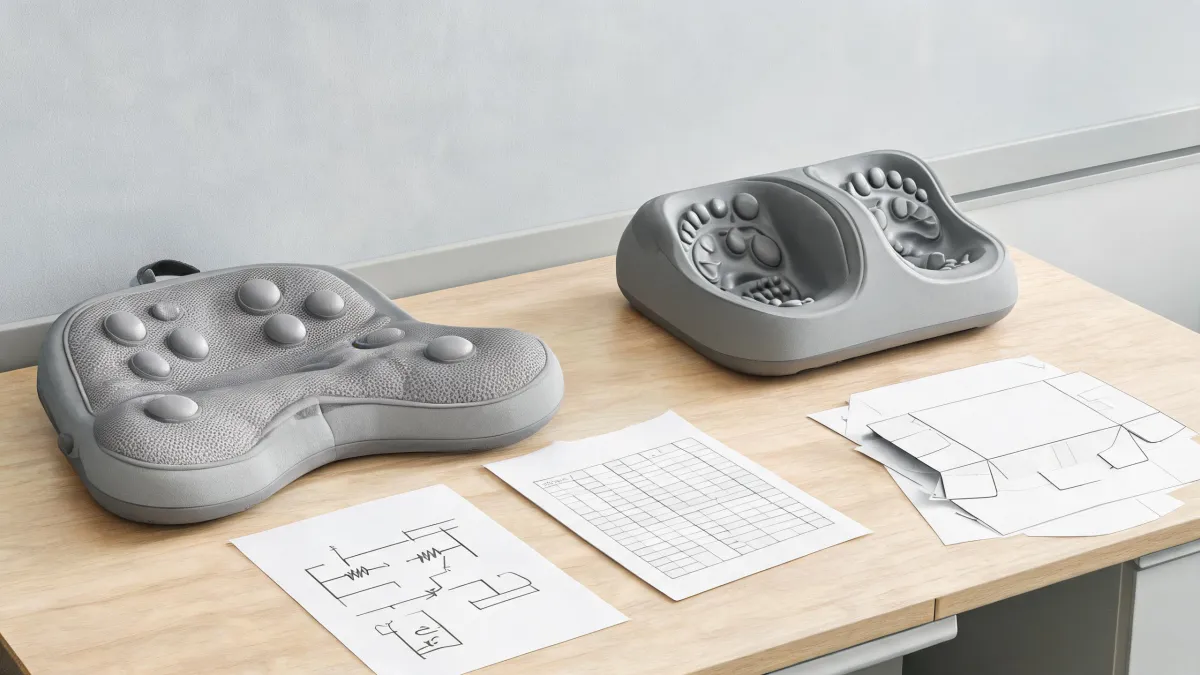
Is the Homedics SP-25H a medical treatment for a sore neck? No. The instruction booklet that ships with the unit settles that in one sentence: "This product is not intended for medical use. It is intended only to provide a luxurious massage."
That sentence frames the whole purchase. The SP-25H is a comfort device, so the useful question is not whether it treats a neck but whether a non-medical massager earns its price once the neck itself has been dealt with. The material buyers usually paste next to this product is easy to misread: massage therapy may be helpful for neck or shoulder pain, the benefits may only last for a short time, and massage should not be used to postpone a provider's look at a medical problem. Those statements describe massage as a practice, reviewed as a category. Neither comes from a study of this device.
What the SP-25H Manual Actually Claims
Read the wording the way an engineer reads a spec sheet. Intended use is the manufacturer's own declaration of what a product is for, and this declaration names two things: not medical use, and a luxurious massage. The purpose clause points at exactly one outcome, and the outcome is feel. Pain, symptoms, treatment, and the neck sit outside the part of the sentence that defines the product.
Why does that line outrank a product-page headline? A manual is the document a manufacturer has to stand behind through warnings, warranty language, and returns. Marketing copy carries no such burden. When a page lists neck and shoulders among the places a massager presses, it is describing reach, not naming an effect on a symptom. The intended-use line is the boundary the rest of the paperwork is written around, and it tells you what category of thing you are pricing before you compare a single feature.
Keep the reading narrow. It covers the Homedics SP-25H and the booklet version behind this article, not the whole catalog and not the older unit someone is reselling online. Manuals get revised and models get replaced. If you are weighing a different device, find its own intended-use line; if you cannot locate one for the exact unit in the box, you have found a reason to pause rather than a reason to guess.
Which Neck-Pain Evidence Applies Here
The most-quoted line in this neighborhood is short: massage therapy may be helpful for neck or shoulder pain, but the benefits may only last for a short time. Two words carry the weight. May is hedged on whether it helps at all, and short is blunt about how long any help survives.
Notice what was studied. That summary sits at the level of massage therapy as delivered in practice, mostly by hands, across mixed techniques and mixed populations. It is not a trial of a motorized shiatsu cushion, and the material behind this article turned up no independent clinical study of the SP-25H itself. So the category statement hands you the caution and none of the credit: you inherit the possibility that a benefit fades, and you do not inherit a demonstrated benefit for this particular device.
Plan your spending around the second half of that sentence. If benefit in the best-studied version of this therapy is short-lived, then nothing built on that evidence can promise a cumulative fix. A session that feels good for an hour fits inside the limits cleanly. A device bought to unwind a chronic problem is being asked to do work the literature never assigned it.
What Are the Real Candidates for Neck Symptoms
At the moment you stare at the buy button, three candidates exist, and they sit at different levels. One is a consumer product with a written non-medical purpose. One is massage therapy as a service category, described as possibly helpful for neck or shoulder pain and possibly brief in effect. One is a medical evaluation, which the same federal health information tells you not to delay in favor of massage.
Mixing them is where the error starts. Each candidate answers a different question: does this feel good and fit my budget, does this practice have any support for my symptom, and what is actually wrong with my neck. Only the third produces an answer you can act on clinically, and only the second has research attached at all.
Suppose a buyer has had a dull neck ache for a couple of weeks and cannot tie it to a lift, a pillow, or a long drive. The honest shortlist for that person is not one massager against another; it is an appointment first, and a comfort device later if they still want one. Suppose instead the ache followed a known, minor, already-settled strain and a clinician has cleared it. Now the shortlist really is between devices, and the manual's purpose clause becomes the deciding document rather than a footnote.
Order Your Criteria Before You Compare Devices
Sequence beats the criteria themselves, because the first step can remove the product from the table. Start with the care boundary. If your neck symptoms are new, unexplained, or getting worse, a health care provider comes first and the device is not on the table yet. The trade-off is a few days of not shopping against money spent on something that cannot answer the question you actually have. Massage is not a stand-in for that appointment, so a purchase made in its place starts from the wrong premise.
Settle the purpose second, and write it down in your own words. If the honest answer is a pleasant stretch of minutes, the paperwork covers you. If the honest answer names a symptom that should improve and stay improved, no part of this package supports that, and no discount changes it.
Third, check the paperwork against the exact unit. The intended-use sentence quoted here belongs to the SP-25H and to the booklet version on file. If the box in front of you is a different model, or a printing you cannot see, that sentence does not automatically travel with it. A seller who can name the model and the instructions that ship with it is easier to trust than one who waves at a category.
Price and convenience come last, and neither can lift the ceiling. Convenience is cheap to deliver and effect is not, so a lower price or a friendlier return window changes how pleasant the purchase is, never what it can do. Ranking two devices on controls, comfort, and cost is a sensible way to finish. Ranking them on symptom relief is not, because neither one has that support behind it.
When to Buy It and When to Skip It
If you want a short, non-medical relaxation session and your neck question has already been answered by someone qualified, go with it. The reason is narrow and it is enough: the SP-25H is sold as a comfort product, and the use its own paperwork describes is a massage, not an outcome. The trade-off is that you are paying for how the session feels, so judge the purchase on that — controls you can reach without contorting, a shape that fits your neck, a session length you will actually run — and not on a relief curve the manufacturer never printed.
Skip it if you are hoping it will replace or postpone a medical evaluation. That is not a cautious reading of the research; it is the plain text of it. Massage therapy is not supposed to be used to put off seeing a health care provider about a medical problem. The trade-off is uncomfortable but simple: you give up the feeling of having done something about your neck tonight, and you keep the chance of learning what is actually going on.
The same answer applies if you need a documented therapeutic claim before you spend money. Neither the manual nor the category-level massage material will hand you one for this model, so wait until something in writing covers the exact unit you are buying. The cost of waiting is time, and time costs you nothing if the device was going to be comfort anyway; it saves you from paying for a promise that existed only in the ad copy.
Which Claims Stay Unverified Before You Buy
Some things cannot be checked with the material in front of you. There is no hands-on trial of this unit here, no side-by-side comparison, no record of how it holds up over months, and no independent clinical study of the SP-25H. That absence is why this article offers no ranking, no personal experience, and no treatment or recovery guarantee. It also means any page that places this device first on symptom relief is showing you something its own paperwork does not.
Turn the gap into questions you can send a seller. Which model is this exactly, and which instruction booklet ships with it? Does that booklet carry the non-medical intended-use statement, and can they send that page? Is there any study of this specific model, as opposed to massage in general? A seller who answers those three cleanly is telling you something about how the rest of the order will go as well.
Ask what would change the verdict. A study of this exact model, or a manual revision that rewrites the intended-use line, would do it, and neither exists in the material behind this article. Until one does, when a listing puts this device inside a paragraph of neck-pain treatment language, go back to the purpose clause and check who wrote it.
The SP-25H is not for the buyer whose neck symptoms are unexplained, worsening, or who is quietly using the purchase to delay an appointment. It is for the buyer who has already had the neck question looked at, wants a non-medical comfort session inside the written limits of the manual, and is willing to judge the device on how the session feels rather than on what it supposedly fixes.
