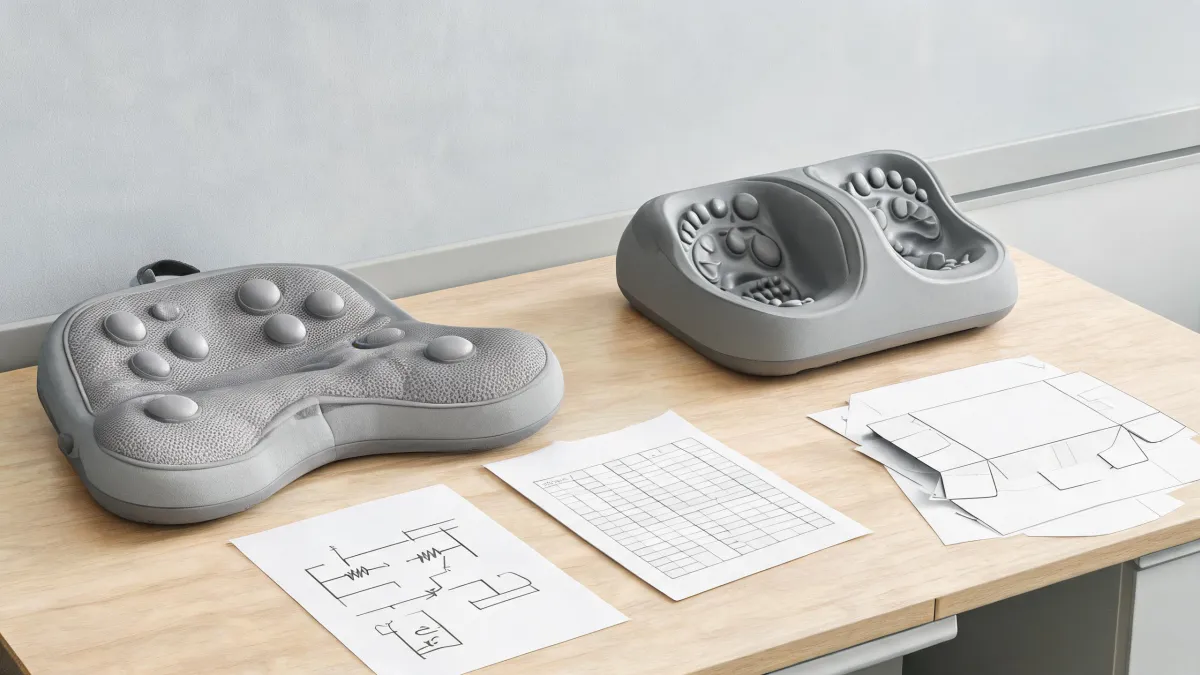
Press the heat button on a Homedics SP-25H with the massage switched off, and nothing gets warm. The instruction sheet is blunt about it: heat will not work unless the massage function is activated. That single line rearranges the product. This is not a massager with a heat pad bolted on the side; it is a massager that can warm up while it kneads, and the warmth has no independent life of its own.
Everything below stays inside the SP-25H and the manual version filed with it. Button behavior, the time limit and the way heat is gated belong to that model and do not carry over to other shiatsu units, even ones that look similar in photos. There was no bench test and no hands-on trial behind this page; the operating sequence and the session limit come straight off the manufacturer's instructions.
The Heat Button Waits for the Massage Button
The sequence is short and fixed. Turn on massage first. Then press the heat button once and heat activates. Press the same button a second time and the heat stops, without touching the massage setting. Nowhere does the manual describe a route where heat arrives while the massage mechanism sits idle, and the two switches are not peers.
That gives the definition worth carrying into the store: the SP-25H is a shiatsu massager whose heat is a gated add-on mode rather than a separate function. The gating is not a footnote about button choreography. It decides what the device can be used for, because any use that needs warmth on its own sits outside the design.
What a Gated Heat Mode Means for Daily Use
Here's the thing about heat that only exists while a motor runs: every warm minute is also a kneading minute. You cannot park this unit against your lower back, leave the room, and come back to a warm surface. The massage heads are working the entire time the heat is on, so what you feel is pressure plus warmth, never warmth by itself.
A skeptic would say the button order is trivia, the kind of detail only instruction-readers care about. It is not trivia, because it answers the first question most buyers actually have: can I use this as a warm thing I slump against at the end of the day? On this model, no. The warmth is a passenger, and you take the ride whether or not you wanted it.
Whether that trade is good depends on what you came for. If the reason you are shopping is a back that feels tight after a desk day, the coupling costs you nothing, because the massage was the part you wanted and the heat rides along with it. If the appeal was a warm thing to lean on quietly, the coupling is the whole problem, and it shows up the first time you press heat on its own.
Why This Isn't a Heating Pad With a Motor
A heating pad's entire job is warmth with nothing moving. You drape it, you forget it, and stillness is the point. The SP-25H inverts that arrangement: the warmth exists only inside a massage session, so quiet, motionless heat that lingers is not something its controls can produce. Same room, same intent, different machine.
The purchase question that follows is narrow and useful. Is warmth the goal, or is warmth a bonus on top of kneading? If it is the bonus, the dependency costs you almost nothing, because you were going to run the massage anyway. If warmth is the goal, this is the wrong category of device, and no amount of staring at product photos will fix that.
The 15-Minute Cap and Your Evening Routine
The same instructions cap a session at 15 minutes: do not use this product for more than 15 minutes at a time. Because heat only runs while massage runs, that cap also bounds your heat exposure. A long, slow warm-up stretched across an entire movie is not a use this manual describes.
What the sheet does not spell out on this page is how the maker wants repeat sessions handled, or what it says about skin sensitivity. Those answers are worth reading in the copy that ships in your box, since they can vary by model and by instruction version. Where the manual is silent, that silence is not permission.
Dozing against it is the scenario that falls apart first. A device that kneads without pause is not a heat source you nap on, and the sleeping-heat-pad habit people bring over from other products does not survive contact with these controls.
The Obvious Objection That It's Just Boilerplate
Imagine a weeknight where your shoulder is tight and all you want is warmth on it, no kneading, no pressure, just heat while you read. On this model you press heat and get nothing until the massage is running, so the evening you pictured cannot happen. The machine has no mode for it.
The obvious objection is that this is fine print nobody reads, and that a real owner would simply work the buttons until something happened. Working the buttons is exactly what the manual describes, and it produces heat only after massage is on. The statement is an operating instruction, not a liability warning buried at the back, and it sits alongside the 15-minute limit, which is the other thing a buyer wants to know before paying.
To be plain about the limits of this page: no independent clinical study of the SP-25H was collected for it, so nothing above is a treatment or recovery claim. What the manufacturer documents is a control relationship and a time limit. What it does not document, this article will not invent.
What to Buy If You Want Warmth Alone
If warmth without vibration is the need, buy a heating pad or a heat-only device; that is the honest fit. The SP-25H is better understood as a massager that adds heat inside its sessions. If you want kneading and the heat is a bonus, the dependency blocks nothing you were planning to use.
So can you buy it just for the heat? Not on this model's documented controls, no. The heat button is a companion to the massage, gated behind it and bounded by the same session cap, which makes the SP-25H a poor stand-in for a warm pad and a sensible pick for someone who wanted the kneading first. If a medical condition makes heat use a question for you, raise it with a clinician rather than treating any of this as advice.
